
Acne scars are one of the most common concerns patients bring to our clinic, and one of the more nuanced to treat. Not all scars are the same, and not all of them respond to the same approach.
This article explains how acne scars form, which types respond well to hyaluronic acid filler treatment, what the procedure involves, and what results you can realistically expect. It is written for adults in Atlantic Canada who are exploring non-surgical options for acne scar improvement.
Here is what we cover:
- How Acne Scars Form
- Can Hyaluronic Acid Fillers Help With Acne Scars?
- What the Treatment Involves
- Results, Longevity, and Maintenance
- Is This Treatment Right for You?
How Acne Scars Form
Acne scars develop when inflamed blemishes damage the skin and the underlying connective tissue. As the skin attempts to repair itself, collagen production can go two ways: too little collagen creates a depressed scar, and too much creates a raised one. The type of scar that forms depends on the severity of the original breakout, genetics, and how quickly the acne was treated.
Depressed scars, known as atrophic scars, are the most common type and the category most likely to benefit from filler treatment. They sit below the surface of the surrounding skin, creating a shadowed, uneven texture that is often most visible in raking light.
Understanding the specific type of scar you have is the first step in choosing the right treatment. Not all acne scars respond to the same approach, and some require a combination of treatments or a different modality entirely.
Not sure which type of acne scars you have, or whether fillers are the right fit? Book a consultation at Allura.
Can Hyaluronic Acid Fillers Help With Acne Scars?
Hyaluronic acid fillers work by lifting the base of a depressed scar from below, reducing the depth of the indentation and blending the treated area with the surrounding skin. The technique used for scar treatment differs from standard volumizing filler placement. It requires precision, an understanding of scar morphology, and experience working with textured skin. For more on how hyaluronic acid fillers work in general, see our overview: Hyaluronic Acid: Uses, Benefits, and Side Effects.
Types of Acne Scars Fillers Can Address
Hyaluronic acid fillers are most effective for rolling scars and, in some cases, boxcar scars. Rolling scars have sloping edges and a wave-like texture, making them well suited to the subtle lift that filler provides. Boxcar scars have sharper, more defined edges and a flat base; shallower boxcar scars can respond reasonably well, while deeper ones often require additional treatment.
Broad, shallow atrophic scarring across larger areas of the cheeks can also be improved with filler, particularly when combined with collagen-stimulating treatments.
Types of Scars That Require Other Treatments
Ice pick scars, which are narrow and deep, do not respond well to filler alone because of their small diameter and steep walls. Raised scars (hypertrophic or keloid) require a completely different treatment approach and are not addressed with hyaluronic acid fillers.
Your injector will assess your scar type at consultation and recommend the most appropriate treatment path, which may involve filler alone, filler in combination with laser resurfacing or microneedling, or a different approach altogether.
What the Treatment Involves
Treatment begins with a thorough assessment of your skin, scar type, and overall goals. Your injector will discuss which scars are likely to respond to filler, what improvement you can realistically expect, and whether other treatments would complement or replace filler in your case.
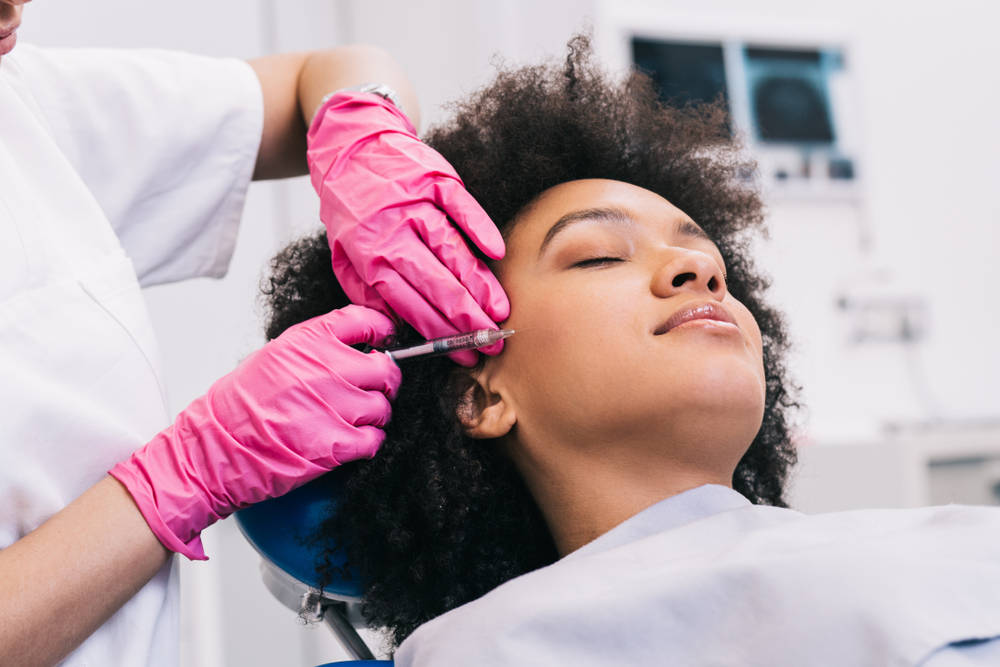
On the day of treatment, the area is cleaned and a topical numbing cream is applied. The filler is then placed beneath individual scars using a fine needle or cannula. The injector may gently massage the area to ensure even distribution. The session typically takes 30 to 60 minutes depending on the number and distribution of scars being treated.
Most patients find the procedure tolerable. Some swelling, redness, and mild bruising is normal afterward and generally resolves within a few days to a week.
Results, Longevity, and Maintenance
Results are visible immediately, though final results are best assessed after swelling has fully resolved, usually within one to two weeks. Most patients see a meaningful reduction in scar depth and an improvement in overall skin texture. Multiple sessions may be recommended for more extensive scarring or to achieve an optimal outcome.
Hyaluronic acid filler is not permanent. In facial areas, results typically last between 6 and 12 months, though individual variation in metabolism affects this. Some patients choose to maintain their results with periodic top-up treatments. Over time, some clinicians also observe a degree of collagen stimulation in treated areas, which can contribute to ongoing improvement between sessions.
Is This Treatment Right for You?
Hyaluronic acid filler is a practical, non-surgical option for the right candidate. You may be a good fit if you have rolling or shallow boxcar scars that are affecting your confidence, you want improvement without surgery or significant recovery time, and you understand that results are gradual, variable, and require maintenance.
The most honest guidance we can give you is this: not every acne scar responds the same way, and not every patient needs the same approach. A consultation is the only reliable way to assess your skin and build a treatment plan around your specific situation. At Allura Medical Aesthetics and Surgery in Dieppe, New Brunswick, we work with patients across Atlantic Canada looking for evidence-based, personalized solutions for acne scarring. We welcome you to book a consultation with our team.
Ready to do something about your acne scars? Book a consultation at Allura.